Palm Bay, FL – Today is the last day the city will mail a quarterly utility bill. The Utilities Department cut its final quarterly invoice on April 23, 2026, closing the book on a billing cycle that has been in place for decades. For about 12,000 households, the next bill will not arrive in July as a three-month lump. It will arrive July 23 as a single monthly charge, and it will be the first of twelve a year instead of four.
That change is the first of three the city is running back-to-back over the next ninety days. Residents will see a new processing fee on card and e-check payments starting June 22. They will see a new billing rhythm starting July 23. And behind both of those shifts sits a new payment portal, Invoice Cloud, which replaced a system knocked offline by a ransomware attack in February. Seven years, three rounds of disruption, and the customer is the one who has to keep up.
What changes today
The April 23 bill going out right now is the last quarterly statement Palm Bay will issue for solid waste and stormwater. Those two services cover the roughly 12,000 households in the city that run on well and septic and therefore do not get a monthly water and sewer bill. Everyone else in Palm Bay, about 40,000 accounts, has always been on monthly billing because the water utility bills every month.
The City Council approved the move to monthly at the March 5, 2026 Regular Council Meeting. The motion came from Deputy Mayor Mike Jaffe, seconded by Councilman Kenny Johnson, and passed unanimously. City Manager Matthew Morton told council the quarterly model was costing the city money it could not collect. By the city’s own figures, 54 percent of quarterly accounts run 90 or more days late. Monthly accounts run 3 percent over 90 days. That gap is the reason council acted.
Why the city pushed for the change
Uncollected solid waste and stormwater fees have forced the council to move money out of reserves year after year to cover the bill from Republic Services and the city’s own stormwater operations. In 2021 the council transferred $230,000. In 2023 it was $578,000. In September 2024 the shortfall hit $1,330,447 in a single appropriation. The quarterly lag was structural. When the city only sends a bill every three months, and a renter moves out in month two, the account is often uncollectable before the next invoice is even printed.
Monthly billing shortens that lag from ninety days to thirty. It does not fix the deeper problem, which is that well and septic customers are not connected to a service the city can shut off for non-payment. Water customers pay on time because water gets cut when they do not. Solid waste and stormwater have no shutoff. Monthly billing will improve collection frequency. It will not close the structural gap between customers the city can pressure and customers it cannot.
The new processing fees
Starting June 22, 2026, every card and e-check payment to Palm Bay Utilities carries a new processing fee. Credit and debit cards will be charged 3.5 percent of the payment amount. Electronic check, known as ACH, will be charged a flat $1.95 per transaction. The city announced the change on April 22 through its news portal. The fee applies to utility bills, building permits, business tax receipts, and every other city service paid through the Invoice Cloud portal.
One payment method is exempt. Autopay enrolled against a checking or savings account, ACH autopay, will not be charged either fee. Autopay on a credit or debit card is not exempt and will pay the 3.5 percent every cycle. For a household paying an average $90 combined solid waste and stormwater charge on autopay with a credit card, that is a new $3.15 charge every month, or about $37 a year. On an ACH autopay, it is zero.
The fee is what the payment processor charges the city to run the transaction. Until now, the city absorbed part of that cost. Starting June 22, the full processor fee passes through to the customer. This kind of administrative pass-through is common practice for municipal billing portals and does not require a separate council vote when the underlying contract already authorizes it.
The action item for residents
If a household is currently on autopay with a credit or debit card, the fee will start hitting automatically on the first payment cycled after June 22. The switch to avoid the fee is to re-enroll autopay against a checking or savings account before that date. That is done through the Invoice Cloud portal linked from palmbayfl.gov, or by calling Utilities Customer Service at 321-952-3420. Households that pay one-time online with a card will pay 3.5 percent each time. Households that pay one-time with ACH will pay $1.95 each time. Households that pay by mailed check or in person at City Hall pay no processing fee at all.
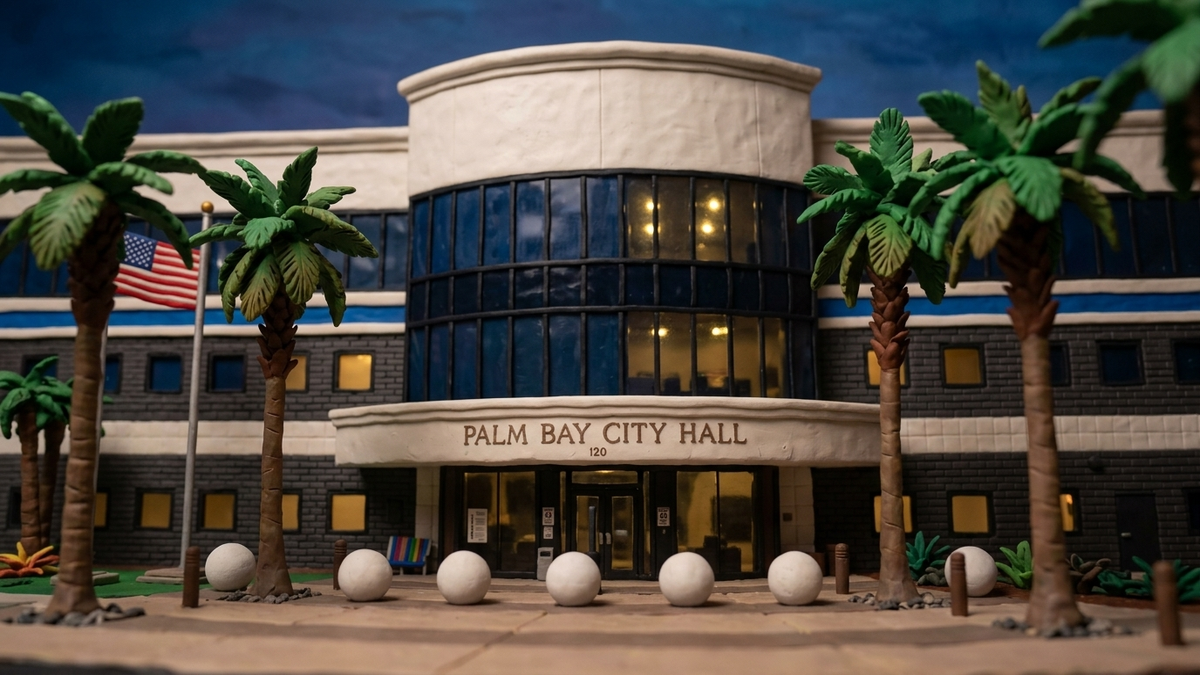
Residents who prefer to avoid any electronic processing can still pay by check or money order at Building E next to City Hall at 120 Malabar Road, or by dropping payment in the drop boxes at the front and back of City Hall. Public Works payments go to 1050 Malabar Road SW. Phone payments through the utility billing line are also still available.
Three rounds in seven years
Palm Bay has now overhauled its customer-facing payment system three times since 2019. The first round was involuntary. In August 2019, the city’s then-payment platform, Click2Gov, was breached in a Magecart-style JavaScript attack that skimmed credit card data from customers using the online portal. WFTV reported that roughly 8,500 Palm Bay residents who paid online between July 27 and September 5, 2019 had their billing information compromised. Stolen card data showed up on dark web crime forums. Palm Bay was one of eight cities hit in the Click2Gov campaign, with more than 20,000 records stolen across all of them.
The second round was also involuntary. On February 6, 2026, BridgePay Network Solutions, the Lake Mary-based credit card processor that sits behind the Invoice Cloud portal, was hit by a ransomware attack. BridgePay detected degraded performance at 3:29 a.m. that morning and confirmed ransomware by 7:08 p.m. The city’s online payment portal went down with it. The outage lasted at least five days. Card payments came back online around February 11. Phone payments took longer. The FBI and U.S. Secret Service forensic team were engaged. No ransomware group was publicly identified. BridgePay’s initial findings indicated the attack was encryption-focused and no payment card data was compromised.
The SpryPoint piece
The third round is voluntary and overdue. In October 2024, the City Council approved a $948,718 contract with SpryPoint Services to replace the city’s utility billing backbone, a Central Square product that had been in place since before the Click2Gov era. SpryPoint is an enterprise resource planning platform built specifically for municipal utilities. The council reappropriated funds for the project in January and February 2026, which suggests the implementation is running past its original budget schedule. The system’s go-live date has not been publicly announced, but the timing of the monthly billing switch and the new payment portal arrangement lines up with a platform cutover window.
SpryPoint sits underneath Invoice Cloud. Invoice Cloud is the customer-facing portal. SpryPoint is the system of record the portal talks to. A new ERP, a new portal, a new fee schedule, and a new billing frequency are all hitting within the same calendar year. For residents, that means the bill that arrives in July will not just look different because it covers thirty days instead of ninety. It will be generated by a different system, paid through a different portal, and charged a different fee if paid by card.
What to watch for
The first monthly bill will be issued July 23, 2026. Residents on quarterly billing should expect a smaller dollar amount on that invoice, because it covers one month instead of three. The annual total does not change. A $90 quarterly bill becomes a $30 monthly bill. Republic Services has a 3 percent annual increase baked into its contract effective every October 1, so the next rate adjustment will show up on the monthly bill cycle after that date.
Residents who switch to ACH autopay before June 22 will see no fee on any payment after that date. Residents who do nothing will start paying the fee automatically. The Utilities Department can be reached at 321-952-3420 or UtilitiesCustomer.Service@palmbayfl.gov for enrollment help.