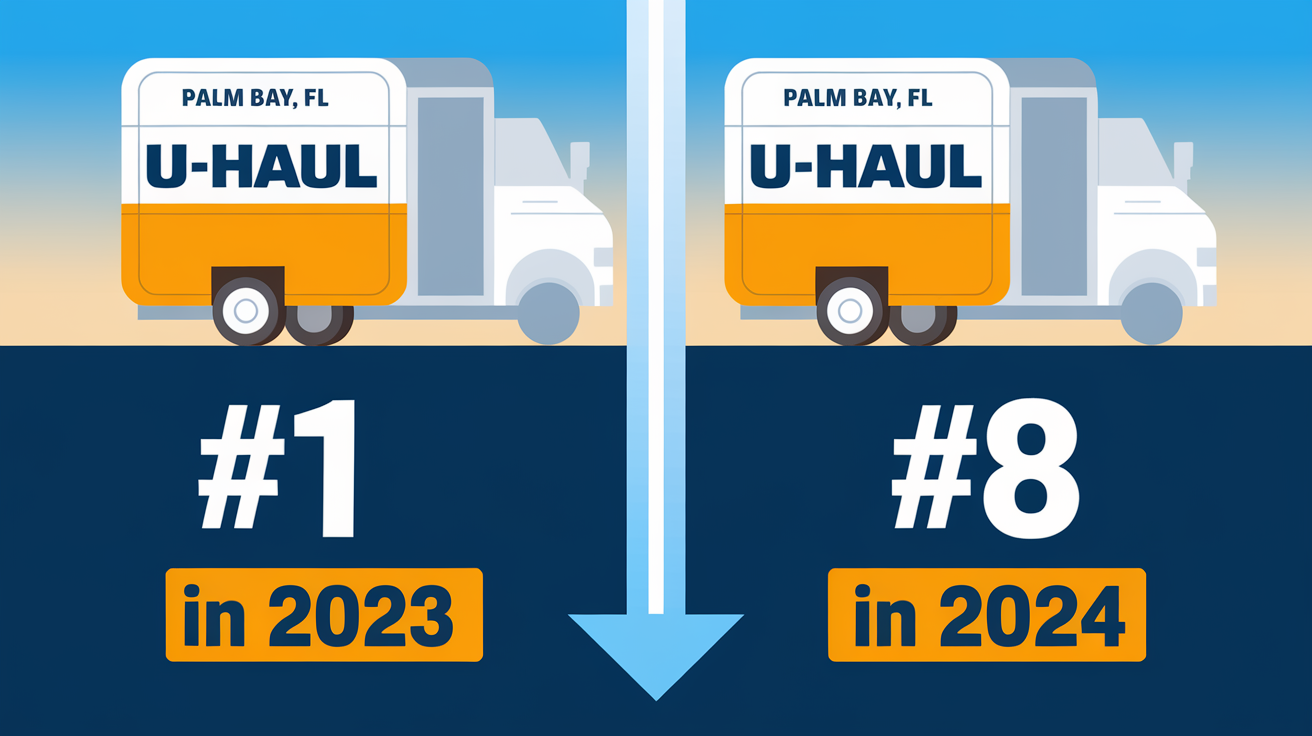
Palm Bay, FL – Palm Bay, once celebrated as U-Haul’s top U.S. growth city in 2023, has seen a notable shift in its standing. This change reflects evolving migration patterns that highlight the competitive dynamics among U.S. cities vying for new residents. Understanding why Palm Bay experienced this shift is crucial for assessing its economic health and its role in broader regional trends. According to U-Haul’s 2024 Growth Index, Palm Bay dropped to eighth place in the Growth Metros category, a significant change that warrants closer examination.

2023: A Year of Explosive Growth
Palm Bay’s top ranking in 2023 was driven by several factors, many of which were shared by other high-ranking cities. While Palm Bay benefited from a strong job market, affordable living costs, and an attractive climate, these traits are also common among other southeastern metros like Dallas and Charlotte. However, Palm Bay’s unique combination of aerospace employers and coastal lifestyle set it apart during its peak year.
- Strong Job Market: Major employers like SpaceX, Embraer, and L3Harris Technologies fostered a booming job market, attracting talent from across the country. The presence of these companies not only created direct employment opportunities but also spurred growth in ancillary industries such as housing, retail, and services.
- Cost of Living: Despite a nationwide trend of rising living expenses, Palm Bay remained an affordable alternative within Florida. Competitive housing prices, coupled with no state income tax, provided families and individuals with a financially viable option to settle down.
- Climate and Lifestyle: A warm, sunny climate and access to Florida’s recreational amenities made Palm Bay an attractive choice for those seeking a balanced lifestyle. This appeal extended to retirees looking for tranquility and professionals seeking better work-life integration.
U-Haul data for 2023 showed 54.7% of one-way movers arriving in Palm Bay, solidifying its status as a prime relocation destination. This net migration influx underscored the city’s growing reputation as a hub for opportunity and quality living.
2024: The Decline and the New Leaders
By 2024, Palm Bay was still among the top 10 metros but faced stiff competition. Cities like Dallas, Charlotte, and Phoenix gained an edge with their robust economic growth, strategic infrastructure investments, and an appealing balance of affordability and quality of life.
Dallas, in particular, claimed the top spot due to its consistent job growth, affordable living costs, and innovative urban planning that appealed to a wide demographic. The city has also benefited from a thriving tech industry and a business-friendly environment that has drawn both startups and established corporations.
Similarly, Charlotte leveraged its position as a financial hub and its commitment to expanding public transit systems, making it increasingly attractive to young professionals and families. Phoenix, with its emphasis on renewable energy development and diverse housing options, continues to appeal to individuals seeking a mix of urban amenities and suburban comfort.
These cities illustrate how targeted investments and economic strategies can reshape migration patterns and shift the balance of growth among top metros.
Factors Behind Palm Bay’s Decline
Several interconnected factors contributed to Palm Bay’s decline in U-Haul’s rankings, highlighting contrasts with the city’s previous strengths in 2023. The robust job market and affordability that once drove its growth appear to have been overshadowed by rising costs, environmental vulnerabilities, and increased competition from other thriving metros. These included both economic challenges and environmental concerns:
- Economic Concerns: Predictions of a potential 10-15% decline in housing prices raised concerns among prospective buyers. Additionally, an oversaturated housing market–driven by rapid construction–fueled uncertainty about long-term property values. While developers attempted to meet demand, questions arose about whether this pace of growth was sustainable.
- Rising Costs: Although Palm Bay remained relatively affordable, the city’s cost of living has been rising faster than competing metros in the Southeast. For some families and individuals, alternative destinations like Ocala and Lakeland offered comparable amenities at even lower costs.
- Environmental Risks: The aftermath of Hurricane Idalia in 2023 underscored Palm Bay’s vulnerability to extreme weather events. While the city escaped the worst of the hurricane’s impacts, broader concerns about climate risks, including flooding and heat waves, became a factor in relocation decisions.
Florida’s Broader Role in Migration
Despite Palm Bay’s decline, Florida continued to play a dominant role in the Southeast’s migration trends. Cities like Ocala and Lakeland, for example, surged in rankings by leveraging lower living costs and targeted economic initiatives, highlighting a diversification in Florida’s appeal. This comparison underscores the competitive dynamics even within the state, where smaller cities have capitalized on niche strengths to attract movers. Ranking fourth among states in the 2024 U-Haul Growth Index, Florida showcased its enduring appeal. Cities like Ocala and Lakeland climbed higher on the list, leveraging their affordability, strong job markets, and community-driven initiatives to attract new residents.
Ocala’s position as the top growth city in 2024 highlights its strategic focus on fostering economic diversity. Known as the “Horse Capital of the World,” Ocala combined low housing costs with thriving sectors in healthcare and manufacturing, creating a balanced and appealing environment for both families and businesses.
Possible Reasons for Palm Bay’s Shift
Palm Bay’s recent dip in rankings reflects a broader recalibration of factors influencing migration patterns:
- National Trends: The 2024 U-Haul data points to a slight cooling in overall migration rates compared to 2023. Economic uncertainty, rising mortgage rates, and inflation concerns have likely tempered movement across the board.
- Hurricane Impacts: While Palm Bay was not directly affected by Hurricane Idalia, the storm’s broader economic and psychological impact on Florida may have influenced some movers to reconsider coastal areas altogether.
Signals for Palm Bay
Despite dropping from first to eighth in U-Haul’s migration metrics, Palm Bay remains in a solid position. Its aerospace and defense presence, strong medical sector, and continuing residential developments all suggest that the local economy has bright spots. However, local leaders and residents may want to watch for:
- Housing Balance: Ensuring that ongoing construction meets actual demand to avoid overbuilding.
- Infrastructure Upgrades: Addressing flooding concerns and road expansions to keep pace with long-term growth.
- Economic Diversification: Attracting an array of manufacturing, service, and tech industries to bolster resilience.
The Road Ahead
Palm Bay’s story illustrates how quickly fortunes can shift in fast-growing regions. Rising costs and environmental risks can temper momentum, yet the area’s strong job opportunities and coastal lifestyle remain powerful draws. As more data emerges–and as the city continues to expand–it will be worth watching how Palm Bay responds to the challenges and opportunities ushered in by this new chapter in its growth story.